Top Power Cords for Home and Office Essential Guide to Choosing the Best
In today's technologically driven world, power cords have become an essential component for both home and office environments. These seemingly simple tools play a critical role in ensuring that our devices function optimally, from computers and printers to household appliances. As we increasingly rely on a multitude of electronic devices for work and leisure, the importance of choosing the right power cords cannot be overstated. This guide will explore the various types of power cords available, their specifications, and how to identify the best options to meet your specific needs.
When selecting power cords, one must consider factors such as length, gauge, and compatibility with devices. A well-chosen power cord not only ensures reliability and safety but also enhances the overall efficiency of your electronics. Whether you're setting up a home office or upgrading your living space, understanding the nuances of power cords will empower you to make informed decisions. In this essential guide, we will delve into the key features to look for in power cords, helping you navigate through the myriad of choices available on the market today.
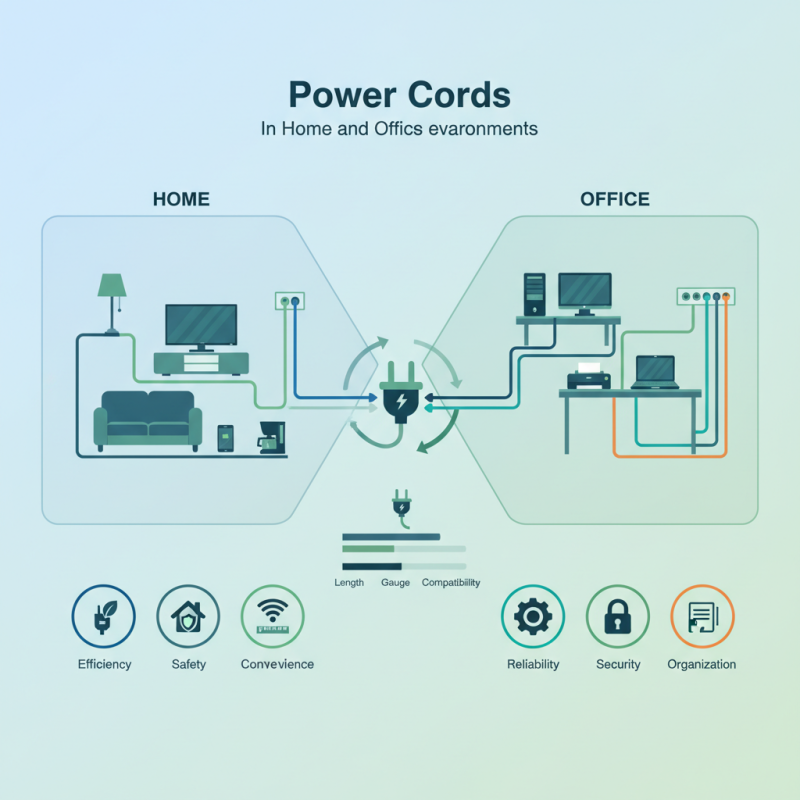
Understanding Different Types of Power Cords for Your Needs
When it comes to selecting power cords for home and office use, understanding the different types available is crucial. Power cords are not just simple connectors; they are vital components that ensure the safety and efficiency of electrical devices. According to a report from the National Electrical Manufacturers Association (NEMA), improper power cord selection can lead to overheating, equipment damage, and even electrical fires. Thus, it’s essential to know the specifications and applications of various power cords to match your specific needs.
Generally, power cords can be categorized into two types: standard and specialized. Standard power cords are typically used for basic household appliances, with voltage ratings from 110V to 240V, which accommodate most consumer electronics. Meanwhile, specialized power cords, such as those designed for high-wattage tools or industrial equipment, often feature enhanced insulation and higher amp ratings to support continuous use without risk. According to the International Electrotechnical Commission (IEC), using the correct type of power cord can improve energy efficiency by up to 30%, a significant consideration for both home and commercial settings. Understanding these types helps users make informed decisions, enabling them to select the best power cords that enhance performance while ensuring safety.
Key Features to Consider When Selecting Power Cords
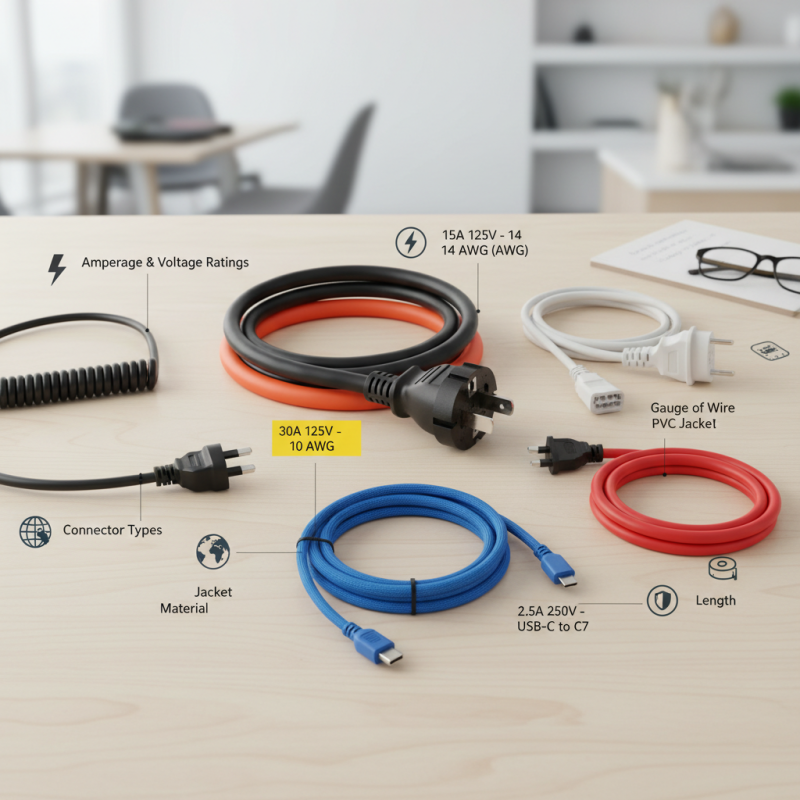
When selecting power cords for home and office use, it’s crucial to consider several key features that can significantly impact safety and functionality. One important factor is the cord's gauge, which refers to the thickness of the wire. The lower the gauge number, the thicker the wire and the greater the current it can handle. For instance, a 14-gauge wire can handle up to 15 amps, making it suitable for most standard appliances, while a 12-gauge wire is better for heavier devices. According to the National Electrical Code (NEC), using the appropriate gauge can prevent overheating and reduce the risk of electrical fires.
Another critical feature is the cord length. Longer cords provide flexibility in arranging devices across larger spaces, but they can also lead to voltage drops, especially if the appliance draws significant power. The American National Standards Institute (ANSI) indicates that voltage drop should ideally be kept below 3% for optimal performance in residential wiring. Furthermore, it's worth checking the cord’s insulation material and resistance to environmental factors, such as moisture and temperature fluctuations; cords with PVC insulation, for example, are generally more durable and safe for both indoor and outdoor use. These considerations ensure that the power cords you select not only meet your immediate needs but also maintain safety and efficiency in your electrical systems.
Power Cord Comparison Chart
This chart presents the key features to consider when selecting power cords for home and office use, including cord length, maximum current capacity, voltage rating, warranty duration, and price.
Safety Standards and Certifications for Power Cords Explained
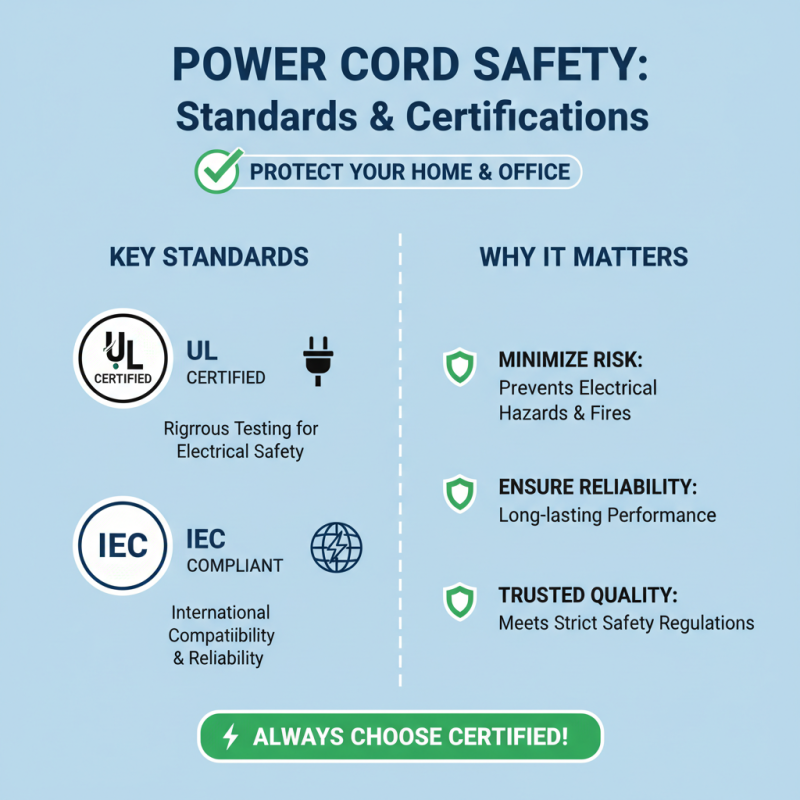
When selecting power cords for home and office use, understanding safety standards and certifications is crucial to ensure reliability and protection. A reputable power cord should comply with established safety regulations such as UL (Underwriters Laboratories) and IEC (International Electrotechnical Commission) certifications. These standards signify that the product has undergone rigorous testing and meets specified safety requirements, minimizing the risk of electrical hazards.
Tips: Always check for labels that confirm a power cord's compliance with relevant standards. Look for products that have been tested for proper voltage and current ratings, as well as those that incorporate features like surge protection. By choosing cords with these certifications, you are investing in a safer environment for your electrical devices.
Additionally, consider the specific environment in which the power cord will be used. For instance, if it’s intended for outdoor use, ensure that the cord is rated for such conditions. This evaluation includes checking for weather resistance and durability. Understanding these criteria will help you select the best power cords while ensuring safety and performance in your workspace or home.
The Importance of Length and Gauge in Power Cord Selection
When selecting power cords for home and office use, understanding the importance of length and gauge is crucial for ensuring safety and efficiency. The length of a power cord affects both the convenience of use and the potential for voltage drop. Longer cords may seem more versatile, but they can lead to a decrease in voltage, particularly if the gauge is not appropriately matched. Choosing a cord that is neither too short nor excessively long helps avoid the risks associated with extension cords, such as tripping hazards and potential overheating.
Gauge, meanwhile, refers to the thickness of the wire within the cord. It plays a significant role in the power carrying capacity and overall performance of the cord. A lower gauge number indicates a thicker wire, which can handle more electricity and reduce resistance. Utilizing a cord with the proper gauge is essential for high-wattage devices to prevent overheating and ensure they operate efficiently. By carefully considering both length and gauge, users can select the ideal power cord that not only meets their operational needs but also prioritizes safety and reliability in any setting.
Top Power Cords for Home and Office Essential Guide to Choosing the Best
| Cord Length |
Gauge |
Maximum Load |
Best Use |
| 6 feet |
16 AWG |
10 A |
Light devices |
| 10 feet |
14 AWG |
15 A |
Home appliances |
| 25 feet |
12 AWG |
20 A |
Power tools |
| 50 feet |
10 AWG |
30 A |
Heavy equipment |
Top Brands and Models of Power Cords for Home and Office Use
When selecting power cords for home and office use, it’s crucial to consider both safety and functionality. There are various types of power cords available, including
extension cords,
power strips, and
surge protectors. Each type serves unique purposes, from extending reach for devices to providing multiple outlets for several gadgets. Look for cords that have the necessary voltage and amperage ratings to match your devices, ensuring they operate safely without overheating.
Tips: Always check for a UL (Underwriters Laboratories) certification label on power cords, which indicates that the product meets specific safety standards. Additionally, opt for cords with built-in surge protection, especially in areas prone to electrical fluctuations. This added layer of security can help prevent damage to your electronics.
Another essential consideration is the length and flexibility of the cord. Longer cords provide more placement options for appliances, but they can also lead to tangling and clutter if not managed properly. For spaces where aesthetics matter, choose cords that blend well with your environment.
Power cords that are flat or come in various colors can be both functional and decorative.
Tips: Consider using cable management solutions to keep cords organized and out of sight. This not only enhances the visual appeal of your workspace but also reduces the risk of accidents caused by trailing wires. Always store unused cords neatly and avoid daisy-chaining multiple extension cords, as this can create a fire hazard.